









Sustainability & Science
Low Carbon Footprint

Low Carbon Footprint
Product Carbon Footprint Inventory Results
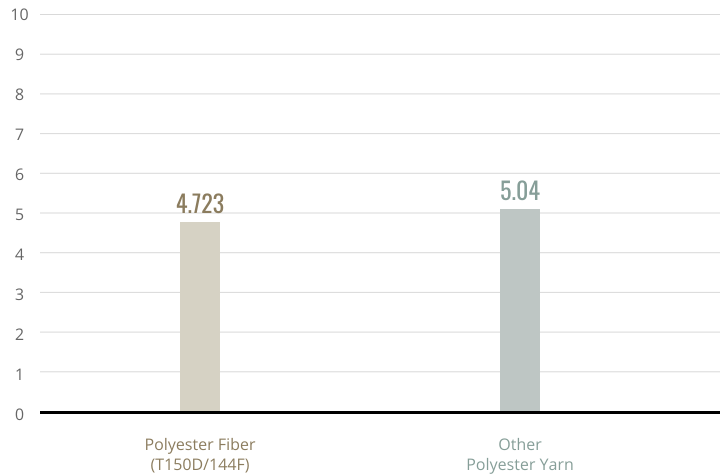

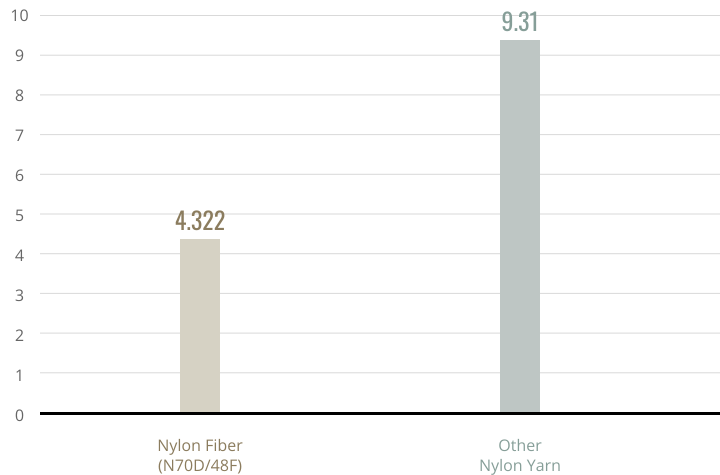

Carbon Reduction Potential: Avoiding Incineration of Cocoa Shell Waste
Carbon emissions that would have been generated through incineration are now avoided by repurposing the cocoa shells into yarn, thereby reducing overall carbon emissions.
- Total carbon reduction: 408.941 kgCO₂e
- Calculation scope: The reduced carbon emissions achieved by discontinuing the disposal of cocoa shells through incineration.
- Calculation basis: Based on the total amount of masterbatch purchased over the past year (1,295 kg), it is estimated that approximately 1,079 kg of cocoa shells were consumed.
- 1,079 kg (weight of waste cocoa shells) ÷ 1,000 × 379 kgCO₂e (waste incineration emission factor of Gangshan Incineration Plant).
Raw Material Carbon Emission Comparison (Per kg of Raw Material)
Analyzing the carbon emissions of agricultural waste materials that require the "Granulation" process, cocoa shells demonstrate a significant low-carbon advantage at the raw material stage.
Raw Material
Carbon Emissions (kgCO₂e)
Data Source Note
Cocoa Shell
0.01
Proxy coefficient used (Bagasse, from sweet sorghum)
Sugarcane Bagasse
0.01
Bagasse, from sweet sorghum
Coconut
0.408
Palm kernel meal
Corn
0.831
Maize starch
Rice Husk
1.33
Agriculture Knowledge Entrance
Coffee
7.13
Coffee, green bean
(Data shows Cocoa Shells and Bagasse are the lowest, while Coffee Grounds are the highest).
Carbon Footprint Comparison by Fiber Type (Per Kilogram of Yarn)
When compared with conventional synthetic fibers of the same category, SECAO® yarn consistently demonstrates a lower carbon footprint. The reduction is particularly significant in the nylon category.
Carbon Emissions Comparison Table
Fiber Type
Carbon Footprint (kgCO₂e / kg yarn)
SECAO® Recycled Polyester Cocoa Yarn
4.723 kgCO₂e
Conventional Polyester Fiber
5.04 kgCO₂e
SECAO® Recycled Nylon Cocoa Yarn
4.322 kgCO₂e
Conventional Polyamide (Nylon) Fiber
9.31 kgCO₂e
SECAO® yarn achieves measurable carbon reduction across both polyester and nylon categories. Notably, SECAO® recycled nylon cocoa yarn generates less than half the carbon emissions of conventional nylon fiber, highlighting its substantial environmental advantage.